Redevelopment Potential: Insights from Commercial Land Appraisers in Haldimand County
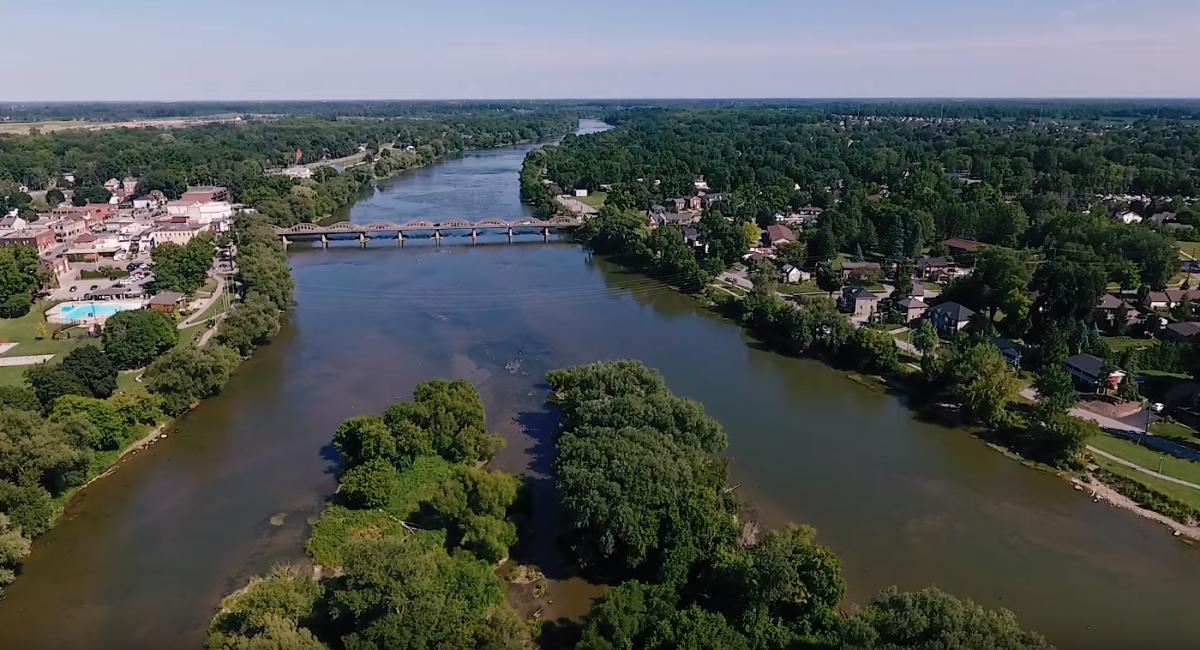
Haldimand County looks quiet from the highway, farm fields rolling toward Lake Erie and the Grand River cutting through towns that still feel neighbourly. Yet beneath the surface, the county is changing. Households are drifting south from Hamilton and the western GTA in search of attainable homes. The Port of Nanticoke is busier than it was a decade ago. Power infrastructure, wind generation, and logistics options have matured. When those threads pull together, older commercial sites start to look different to buyers and lenders, and to the people who set the values that underwrite redevelopment.
I have sat in more than a few council chambers and on many gravel shoulders across Caledonia, Hagersville, Dunnville, and Cayuga, turning over the same question: what is this site worth not as it stands today, but as it could be under a viable plan? That is where commercial land appraisers in Haldimand County earn their keep. The answer depends on highest and best use, zoning texture, infrastructure timing, environmental condition, absorption in a small market, and the difference between a drawing and a shovel-ready plan.
Where value lives in Haldimand
Unlike Toronto, where the market often values density by default, Haldimand County values tend to hinge on serviceability, access, and credible user demand. The playbook is more nuanced. A 2 acre former gas station on Highway 3 might be worth less per square foot than a similarly sized parcel tucked a block off Argyle Street in Caledonia simply because the latter can walk to amenities and tie into municipal water and wastewater with little off-site work. I have seen developers pay a premium for a corner in Hagersville with an existing signalized intersection because, in a small town, one light can make or break the success of a multi-tenant pad.
Commercial building appraisal in Haldimand County starts by asking who the user will be. Medical, small format grocery, trades contractors needing fenced yard space, local government services, and drive-thru quick service restaurants show up repeatedly. Regional office tenants rarely do. That reality pulls through to land value. Appraisers discount elaborate concept plans that do not line up with the tenant base or ignore parking ratios that franchisees insist on.
Appraiser’s lens on highest and best use
Any credible commercial property assessment in Haldimand County runs through the same sieve: legal permissibility, physical possibility, financial feasibility, and maximum productivity. The mechanics are familiar across Ontario, but local judgment matters.
Legal permissibility is not just a copy and paste of the zoning by-law. Haldimand’s Official Plan policies on downtown mixed use, major retail caps in certain settlement areas, and employment land protection all show up in valuation. In Caledonia, downtown height permissions are one thing, but heritage overlays and streetscape guidelines can shave density. In Dunnville, floodplain mapping along the Grand River can restrict basement use, complicate building placement, and add to foundation costs. An appraiser will read the zoning, then call the planner to understand relief patterns, committee of adjustment precedents, and whether the County has appetite for a site-specific by-law.
Physical possibility comes down to soil, slope, and servicing. On paper, a corner across from the arena may be perfect. In practice, a perched water table or peat can add six figures to foundation work. One client in Cayuga learned this the expensive way after geotechnical tests forced a redesign with driven piles. Appraisers pay attention to geotechnical flags in Phase II environmental reports and to past building permits on adjacent properties that hint at conditions below grade.
Financial feasibility is where market scale matters. A 25,000 square foot build-to-suit for a national retailer can work with lower land costs and straightforward site work. A speculative 60,000 square foot plaza almost never pencils without pre-leasing. Absorption is slower and lenders set tighter covenants. I have seen cap rates for stabilized small town retail sit 100 to 200 basis points higher than in mid-sized cities. That spread goes straight into residual land values.
Maximum productivity is the endpoint. In Haldimand, it often points to modest, phased development rather than a single bold move. A one acre pad with a drive-thru and two in-line CRU bays can be the most productive use even if the zoning allows more height, simply because it leases quickly and fits the tenant pool.
Local factors that move the needle
Four conditions routinely push commercial land values in Haldimand up or down by double digits.
Servicing capacity and timing. Growth in Caledonia has put pressure on water and wastewater capacity in some periods. Hagersville has staged upgrades. Dunnville’s plant can be tight during peak seasons. Appraisers discount land that needs front-ending of off-site works or where a developer must sit in the queue for allocation. A letter from the County confirming allocation availability can move a valuation more than elaborate renders ever will.
Transportation and logistics. Proximity to Highway 6, Highway 3, and the Port of Nanticoke matters for contractors’ yards, agri-business suppliers, and fabrication shops. Sites that can accommodate outdoor storage, truck courts, and easy egress hold a premium. If a site needs turning templates and curb relocations on a county road, those costs will show up in the appraiser’s pro forma.
Environmental history. Gas stations, dry cleaners, farm supply depots, and legacy auto repair shops dot the county. Phase I ESAs flag them, and Phase II work puts numbers on soil and groundwater impacts. Remediation in Haldimand can run from 150,000 to 750,000 dollars depending on plume size and depth. Where contamination crosses property lines or migrates toward the river, risk premiums rise. Brownfield incentives are not as rich as in larger centers, so cleanup costs are weighted carefully in the residual approach.
Community and Indigenous context. Many commercial sites sit within traditional territories associated with Six Nations of the Grand River and the Mississaugas of the Credit First Nation. Private redevelopments do not trigger the Crown’s duty to consult, but early, good faith engagement is smart practice, especially where archaeological potential exists. Appraisers consider timing risk when archaeological assessments are likely, and they pay attention to registered sites and Stage 1 recommendations.
The three approaches, adapted to a small market
Commercial building appraisers in Haldimand County use the same valuation approaches as anywhere else, but with local adjustments.
The direct comparison approach matters most for clean, vacant commercial lots within settlement areas. Sales on or near Argyle Street in Caledonia, King Street in Hagersville, and Broad Street in Dunnville feed the grid. The challenge is thin data. Appraisers widen the search radius to Norfolk and parts of Brant, then adjust for traffic counts, income demographics, and tenant demand. A corner lot with a light and three curb cuts is not directly comparable to a mid-block site that needs a shared entrance. Expect granular adjustments for access and shape.
The cost approach plays a role for existing commercial buildings that might be adapted. If you have a 1980s strip with solid structure but tired facades, an appraiser will model replacement cost new for a modern equivalent, then subtract physical, functional, and external obsolescence. That functionally obsolete two-storey office portion with low ceiling heights will see heavy obsolescence deductions. In smaller markets, external obsolescence from weaker tenant demand can be material, so the cost approach rarely drives value alone, but it can set a floor.
The income approach is king when the path to value runs through stabilized rent. Appraisers model market rent per square foot, vacancy and credit loss, non-recoverable expenses, and a capitalization rate that reflects local risk. A well-located, new-build drive-thru can support strong rents, yet the cap rate may still sit in the high 6s to low 7s because of smaller trade areas and limited buyer pools. If you bring a long-term lease with a national covenant, the rate tightens. If the tenant mix is mom-and-pop without guarantees, it widens. Those seemingly small cap rate shifts can swing residual land values by 10 to 20 percent.
A tale of two corners
Two real projects illustrate how the same size parcel can yield different outcomes.
On a half acre in Hagersville, a dated bank branch sat at a signalized intersection. The buyer planned a 3,000 square foot QSR with double drive-thru and a 2,500 square foot CRU. Zoning permitted it as of right. Water and wastewater capacity were available. Environmental work found minor hydrocarbon impacts from an old UST, cleaned up in three months for 90,000 dollars. The appraiser’s residual analysis backed a land value near 30 dollars per buildable square foot, supported by comparable pad sales along Highway 6. The deal closed without re-trade.
Contrast that with a similar half acre on a curve in Dunnville, mid-block on a county road with no left turn. The concept was a small plaza with medical and retail. But the site needed a shared access agreement across a neighbour’s frontage and stormwater detention would chew up land. Phase II found chlorinated solvents from a historic dry cleaning use nearby. The remediation scope was uncertain. The appraiser loaded soft costs and contingencies, widened the cap rate to reflect re-leasing risk, and the residual value came in 40 percent lower than the vendor’s ask. After six months, the buyer pivoted to a lower intensity plan and renegotiated price around the revised feasibility.
Zoning texture that surprises outsiders
People arriving from larger cities are often surprised at how much nuance lives in Haldimand’s zoning and policy. Downtown Commercial designations welcome mixed use, but parking minimums can still bite. Employment lands near Nanticoke come with outdoor storage permissions, yet site plan controls can be strict around screening and noise. Drive-thru permissions vary, and some arterial corridors include spacing requirements from intersections and from one another.
Minimum Distance Separation from livestock operations sounds like a rural issue, but if you are pushing commercial out to the edge of settlement areas near barns, MDS calculations can affect setbacks. Aggregate hauling routes can influence access design. Conservation Authority regulations, either through the Grand River Conservation Authority or the Niagara Peninsula Conservation Authority depending on the watershed, overlay floodplain and erosion hazard controls. An appraiser who does not weigh these properly will overstate feasible density, and by extension, overvalue land.
Servicing and soft cost math
A credible commercial property assessment in Haldimand County unpacks servicing in plain numbers. I ask for engineering opinions on:
- Available water pressure and fire flow, especially if the use anticipates a sprinklered building.
- Pump station capacity, for sites near the limits of wastewater service.
- Road reconstruction or turn lane requirements tied to site-generated trips.
- Hydro service upgrades for EV-ready sites or high-intensity users.
- Stormwater management options, particularly where land area limits on-site detention.
Soft costs tend to surprise new entrants. Architecture, planning, civil engineering, traffic, environmental, legal, and municipal fees can run 20 to 30 percent of hard costs on small sites, proportionally higher than on large projects. Development charges in Haldimand are modest compared to the GTA, but cash flow timing still matters. Appraisers that model a simple spread between end value and build cost without a detailed soft cost line risk inflating land residuals.
Data scarcity and how appraisers work around it
In thin markets, appraisers earn their fee by triangulating. When there are only two recent vacant commercial land sales in a town, they pull lease comps from similar markets, then back into implied land values via developer pro formas. They talk to commercial appraisal companies in Haldimand County that have seen deals from both sides of the table. They interview planners, building officials, and even signage contractors who know which franchises are quietly hunting corners. They look at building permit reports to see where money is actually being spent. The process is as much about pattern recognition as it is about spreadsheets.
Working with appraisers, not against them
Owners who view the appraiser as a hurdle miss a chance to shape the narrative with facts. Bring a record of past utility locates, any available geotechnical data, lease LOIs with clear terms, and correspondence from the County on servicing capacity. If a site has environmental hair, do not hide it. Provide the full ESA package, including lab results, and a remediation cost opinion from a reputable consultant. Share traffic counts if you have them. These documents cut uncertainty premiums that otherwise drag on value.
For buyers, align your concept with the tenant pool and show realistic timing. An appraiser will haircut a five year rollout that relies on a second phase with speculative tenants. They will give credit for firm pre-leasing. They will also respect a modest, well phased plan over an ambitious rendering that ignores the realities of a two crane market.
A simple sequence for owners considering redevelopment
- Clarify your highest and best use with a planner before drawing. Ask for a candid read on relief needs and timing.
- Commission a Phase I ESA early. If risk appears, plan and price a Phase II before going to market.
- Request written servicing confirmation from the County, not just a phone call summary.
- Build a concept and site plan with conservative parking and circulation. Show turning templates.
- Gather operating history if a building exists. Rents, expenses, capital repairs, and any deferred maintenance notes all shape value.
Debt, equity, and the cap rate reality
Financing in Haldimand County tends to be relationship driven. Credit unions and regional lenders know the tenant base and the construction crews. They also know that exit values sit on a narrower buyer pool, which is why they push pre-leasing and conservative LTC ratios. Appraisers take their cue from recent transactions, but they also test cap rates and yields against lender term sheets. A 7 to 7.75 percent cap for stabilized small format retail is common in some sub-areas. Medical tenancies can tighten that by 25 to 50 basis points. Single tenant net lease assets with a national covenant and a long term may compress further, but if the rent is materially above market, the re-lease risk shows up in the terminal assumption.
These numbers feed the residual. If hard costs are rising faster than rents, the land value wears the squeeze. That is why some owners are choosing adaptive reuse over ground-up builds when structures are sound. I have seen a former furniture store in Dunnville re skinned and subdivided into three medical suites with shared reception. The pro forma beat a teardown because the carrying time shrank and the tenant mix was ready.
Brownfields and patience
Brownfield projects exist in Haldimand, just without big-city subsidies. Timelines stretch if contamination extends off site or if risk assessments are needed. An appraiser will pressure test the remediation path. Will you dig and dump with a Record of Site Condition, or pursue a risk assessment? The first route is simple but can be costly if volumes are high. The second can save on excavation but adds months and consultant fees. Where lenders see clear remediation budgets and schedules, values hold. Where uncertainty lingers, discount rates widen and offers soften.
One small downtown site I worked on in Caledonia had a complicated hydrocarbon plume under the lane. The team chose a risk assessment tied to engineering controls, including vapor barriers and passive venting. It took nine months. The appraised land value reflected that carry, and the vendor accepted a price adjusted for time and risk. Rushing would have killed the deal.
Selling or assembling for a larger play
Assemblies can unlock value, especially near the main corridors. They also multiply risk. Option agreements that give time for due diligence can bridge the gap. Appraisers look closely at how many parcels are critical path and what rights the buyer has if a holdout appears. I have watched a three parcel assembly on Highway 6 unravel because one owner decided to wait for a higher offer. The residual value of the whole dropped when the site plan had to be reworked for a mid-block entrance.
If you are selling a single parcel that adds frontage to a neighbour’s site, your negotiating leverage is higher than the square footage suggests. Bring that context to the appraiser and the buyer. Value in use can push the number above comparable sales where the buyer can unlock a signal or a second entrance with your land.
Common pitfalls that drain value
- Assuming GTA tenant demand and rents will translate without adjustment.
- Ignoring floodplain or conservation constraints until design is advanced.
- Underestimating soft costs and carrying time between phases.
- Banking on left-in, left-out access where TAC guidelines and County practice say no.
- Treating environmental uncertainty as a footnote, not a budget line.
Where demand is coming from
Several demand drivers consistently show up in leases and LOIs:
Healthcare services that want street level, accessible space with generous parking. An aging population in the county, combined with growth in young families from Hamilton spillover, keeps clinics, physio, and dental busy.
Destination food and QSR at well placed corners along Highway 6 and key arterials. National brands test traffic and income ranges carefully, but once they commit, others follow.
Trades and light industrial users who prefer small bays with yard storage. Near Nanticoke, proximity to the port and Stelco’s Lake Erie Works still creates business for fabricators and logistics companies. Properties that combine shop space with screened yard often lease quickly.
Government and community services that anchor small plazas. Libraries, service Ontario locations, and municipal offices are sticky tenants and can de risk mixed tenant rosters.
This mix shapes what credible commercial building appraisers in Haldimand County forecast. It restrains fantasies and highlights pragmatic paths to value.
How the waterfront and the port factor in
Lake Erie frontage is mostly recreational and residential, but the Port of Nanticoke, under the Hamilton Oshawa Port Authority, supports industrial and marine logistics. Commercial land close to the port that can service transport users can command a premium. This is not about storefront retail. It is about heavy truck access, laydown space, and zoning that tolerates noise and outdoor storage. If your parcel sits near rail spurs or established haul routes, bring that to the appraiser’s attention with maps and operations notes. It shortens the distance between concept and financeable plan.
When to call an appraiser
Bring in the appraiser earlier than you think. If you have a sketch, zoning read, preliminary servicing memo, and a realistic lease-up plan, you have enough for a rigorous opinion of value under a stated highest and best use. If you are still at the idea stage, a feasibility memo from an appraiser can save missteps. Commercial appraisal companies in Haldimand County juggle a broad mix of assignments, from farmland with a surplus barn to a downtown mixed use conversion. They can tell you which path is crowded and which one has daylight.
Over the years, I have learned that the best appraisals read like a map. They show the terrain clearly, they mark hazards honestly, and they trace a route that a real team can walk within a reasonable time and budget. That is the work in a https://louisvrpf008.timeforchangecounselling.com/due-diligence-essentials-from-commercial-building-appraisers-in-haldimand-county county like Haldimand, where value is quietly built in measured steps, not in headlines.
For owners, buyers, and lenders seeking a commercial property assessment in Haldimand County, the goal is not to force a big city model into a smaller market. It is to match use to place, budget to reality, and timing to the pace at which good tenants sign and good contractors build. Do that, and the valuation will follow.