Industrial, Office, and Retail: Tailored Commercial Appraisal Perth County Solutions
Commercial property valuation in a smaller market demands local fluency, patience with the data, and a method that respects each asset’s quirks. Perth County is a case in point. Stratford’s cultural magnetism, St. Marys’ limestone heritage and active industry, and the steady main streets of Listowel, Mitchell, and Milverton create a patchwork economy where cap rates, vacancy, and tenant profiles shift every few blocks. A commercial appraiser in Perth County needs to turn over more stones than in a big metro, often driving the comparable search out along Highway 7 or 8, calling brokers after hours, and stitching together a narrative that makes sense to lenders, courts, and owners. That is what tailored commercial appraisal services bring to the table.
The conversation below steps through how a seasoned practitioner approaches industrial, office, and retail assignments in this market. It aims to ground the work in real constraints, show how judgment is applied, and offer practical direction whether you are ordering an appraisal for financing, dispute resolution, or a potential acquisition.
Why Perth County needs a local lens
Big city templates rarely fit here. A retail rent survey taken in Kitchener or London will not transfer neatly to a Stratford side street with a seasonal tourist bump and winter softening. The new owner of a light industrial building outside St. Marys will care less about LEED branding and more about reliable three phase power, turning radii for B-train trucks, and whether the well and septic capacity can support a second shift. Landlords who own a two storey office above retail along a main street face a different absorption curve than a suburban medical condo building.
The way a commercial real estate appraisal in Perth County handles these nuances directly influences value. A three cap swing on a 12,000 square foot strip plaza with net operating income of 175,000 dollars means more than a half million in value difference, which determines whether refinancing is viable or a sale proceeds. That is not theoretical. In 2023 we reviewed a refinancing scenario for a highway retail plaza where lender feedback hinged on a half point cap rate assumption and the appraiser’s explanation of anchor risk when a national tenant had a rolling termination right.
Engagements we see most often
Assignments range from the straightforward to the messy. Purchase and sale decisions, mortgage financing, financial reporting under ASPE or IFRS, expropriation and injurious affection, matrimonial and estate divisions, property tax appeals, dispute resolution, and development feasibility all show up on the calendar. Each purpose affects scope and depth. A desktop update for covenant monitoring uses a lighter data set than an expropriation brief with full market support. CUSPAP standards set the baseline, but the client’s needs and risk tolerance drive the breadth of research, level of inspection, and reporting detail.
Industrial: manufacturing, logistics, and the details that swing value
Industrial in Perth County spans small-bay contractor shops, mid-bay manufacturing with cranes, cold storage for agri-food, and distribution spaces hugging transport corridors. The sales comparison approach often runs thin on immediate local trades, so a perimeter search into Huron, Wellington, and Oxford counties becomes necessary. That means more work on adjustment grids, especially for building age, clear height, yard utility, office build-out percentage, and power.
Small observations move the needle. One owner in Mitchell swore the building’s 20 foot clear height matched a comp used in a prior appraisal. A tape measure confirmed 18 feet to the bottom of the joists, which forced a rent rate reduction by 0.25 to 0.50 dollars per square foot for users who stack racking. Another factory in St. Marys touted a 10 ton bridge crane. That had value, but the narrow column spacing made certain production layouts impossible for modern lines. Demand is not generic, and the market penalty for functional constraints can be more important than the replacement value of specialized improvements.
We analyze:
- Power and utilities. Three phase at 600V, gas service sizing, and backup generation matter. For food processing or fabrication, inadequate amperage can cut the buyer pool in half.
- Shipping access. Turning radii for trailers, dock doors versus grade, apron strength, and whether trucks can queue off the road. Rural industrial parks can have municipal restrictions on truck hours that affect tenant profiles.
- Environmental risk. Past uses such as plating or drum storage trigger a higher probability of contamination. A Phase I Environmental Site Assessment will be a lender checkbox. Even the suspicion of a Phase II can widen the cap rate band by 25 to 75 basis points until risks are quantified.
- Water and waste. Wells, septic capacity, and industrial discharge permissions can be a hard limit on expansion.
- Excess land. A two acre lot with one acre of unused gravel yard can generate value beyond the building through future expansion or outdoor storage income, but highest and best use analysis must consider zoning caps and stormwater management.
Incomes vary. For 8,000 to 30,000 square foot buildings, net rents have commonly fallen in the range of 7 to 12 dollars per square foot in recent years, with higher points for clean, newer, 22 foot clear buildings. Cap rates https://exmarketing.gumroad.com/ often spread from roughly 6.25 to 8.5 percent depending on covenant, term, building utility, and location depth. For single tenant manufacturing assets with specialized fit-out and short remaining term, model risk goes up. We test re-tenanting time lines and prospective tenant improvement allowances, then reflect that in a stabilized income or in a probabilistic sensitivity band for lenders who request it.
Office: not one market, several micro-markets
Perth County’s office story divides into three streams. First, professional and medical services clustered near hospitals, civic buildings, and well-trafficked arterials. Second, second floor walk ups above retail on main streets where stair access limits tenancy. Third, owner-occupied offices in small buildings serving accounting, legal, and engineering firms.
Sales comparisons are uneven. Many trades bundle office with mixed-use components, which require apportionment. Income analysis is usually more reliable, but the lease sample is thin. We keep a rolling log of asking versus achieved rents, concessions, and free rent periods gathered from local brokers and landlords, then cross-check with reported deals from regional databases. The difference between a gross lease with landlord-paid utilities and a true net lease matters more than headline rent.
Key drivers include visibility, parking, and adaptability. A 1970s two storey building with eight small suites can perform well with medical tenants if parking exceeds four stalls per 1,000 square feet and if elevator service meets accessibility expectations. Without these, tenant churn erodes effective gross income through downtime and leasing costs.
Lease-up assumptions are a flashpoint. In one Stratford assignment, a vendor pro forma assumed a three month lease-up for a 4,000 square foot second floor vacancy. Local interviews suggested six to nine months for non-medical tenants because elevator access was borderline and an older HVAC system lacked zone control. Adjusting to nine months and a 10 dollar per square foot tenant improvement allowance changed the valuation by more than 200,000 dollars on a 1.6 million dollar asset. Small line items carry weight when net operating income is modest.
For stabilized office assets, cap rates in the region frequently cluster between 6.75 and 9.0 percent, widening for tertiary locations, dated improvements, or short weighted average lease terms. The yield the market demands is as much about re-leasing friction and capital expenditure expectations as it is about county versus city.
Retail: main street resilience and highway exposure
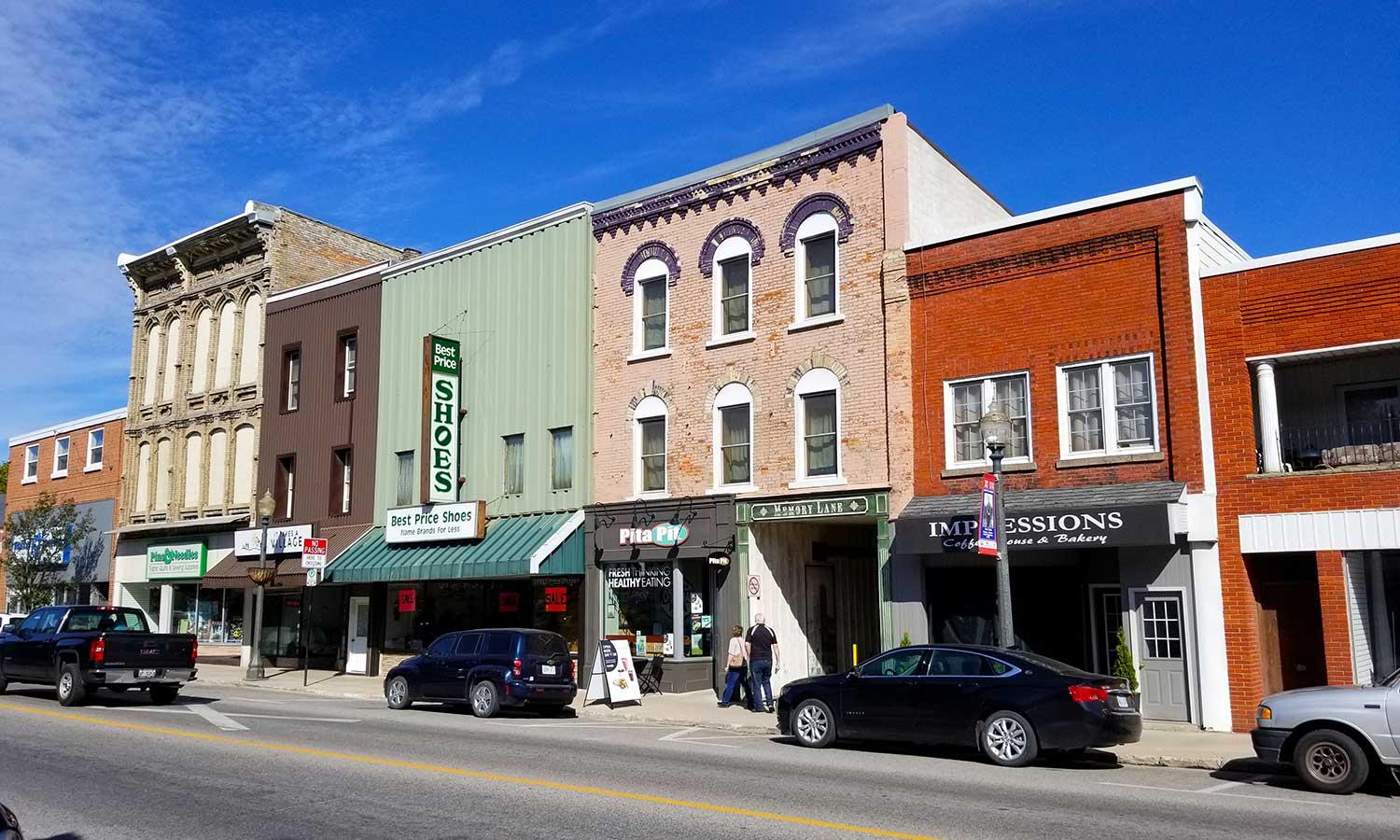
Retail in Perth County holds a strange duality. Downtown Stratford punches above its weight with tourism, restaurants, and specialty shops. Meanwhile, highway-oriented plazas catch everyday spend and service businesses that rely on parking counts more than window shoppers. Each track needs a distinct lens.
Main street storefronts under 2,000 square feet may rent between 18 and 35 dollars per square foot gross in strong nodes, then taper as foot traffic thins and second floor apartments or offices share older mechanical systems. Highway retail with surface parking often trades on net leases between 14 and 22 dollars per square foot, with national tenants commanding the higher end. A shadow-anchored pad with a coffee drive-thru can push above that if drive-through queueing works without backing into site circulation.
Tenant mix risk is not academic. A plaza with a single large national tenant on a lease that includes percentage rent and relocation rights requires deeper lease reading. Percentage rent clauses matter when seasonal peaks skew sales, and many local operators run thin on reported sales data. For valuation, we model base rent separately and give percentage rent limited credit unless sales history can be supported.
Vacancy assumptions carry a subjective weight. A single vacancy in a 12,000 square foot strip can feel like a blip if the trade area has a waiting list of service tenants, but can linger in a weaker town with lower traffic counts. Exposure time in some nodes might average three to six months, while in others it stretches toward a year. Lender briefs often ask for market-supported downtime and leasing cost reserves, and we document that through recent leasing case studies rather than generalized national averages.
Cap rates for well-leased plazas in good highway visibility locations often fall in the 6.25 to 7.75 percent band, though local covenant concentration, remaining term, co-tenancy clauses, and site functionality can move that outside the range. For main street mixed-use properties, a blended rate that reflects residential over retail often emerges, since investors actively price the upstairs apartments differently from ground-floor shop income.
Highest and best use, tested not assumed
In small markets it is easy to wave away alternative uses. That can be costly. One owner in Listowel carried a former bank branch as a single tenant office on short term renewals at a rent of 12 dollars per square foot net. A quiet survey of local medical groups revealed demand at 16 to 18 dollars net if an accessible entrance and exam room fit-out were added. The shift required 350,000 dollars in work, but the resulting net operating income lift more than justified the cost on a seven and a half cap yield. The appraisal recognized this through an as-is valuation and a prospective value upon completion, both supported by credible lease-up timelines.
Excess land, infill potential, façade grants, and residential conversions above grade all play into highest and best use tests. We screen zoning, official plan designations, and parking requirements early. A site that cannot meet municipal parking minimums without variances may still support intensification if shared parking or cash-in-lieu is realistic. That requires more than a checkbox. It demands a short call with planning staff and sometimes a quick design test by an architect to see if the geometry works.
Data, adjustments, and the art of enough evidence
A commercial property appraisal in Perth County leans on mixed sources. Registry documents and MPAC data confirm sizes and legal descriptions, but measured floor areas often differ from roll data, especially in older buildings and mixed-use properties. Broker input fills lease detail gaps. National databases supply broader comp sets, though local verification is essential to avoid out-of-market bias.
Adjustments require discipline. For sales comparisons, we typically adjust for time when the market shows a clear trend, then for size, quality, location, and, for industrial, clear height and power. For income approaches, we match rent type to expense treatment. A 20 dollar gross rent with landlord-paid utilities is not equivalent to a 16 dollar net rent with tenant-paid utilities plus TMI. Normalizing to an effective net basis avoids double counting recoveries.
When comps are sparse, we widen the radius and apply paired sales logic. If a Huron County sale shows a 7.25 percent cap on a 2015-built 24 foot clear industrial with six docks, and a Stratford subject is 2008-built with two docks and lower clear height, we justify a higher yield, explaining each difference. Lenders appreciate clarity more than bravado. Where uncertainty remains, it is better to disclose a reasonable range and explain which end of the range the reconciled value leans toward, based on the weight of evidence.
Purpose and scope shape the deliverable
Not every assignment needs a narrative opus. That said, a valuation that might influence a seven figure lending decision or a courtroom outcome should not be thin. When the scope is comprehensive, an effective report will often include:
- Purpose and intended use, together with intended users, in plain language
- Property description with measured areas, site plan notes, services, and photos that tell the story
- Market overview focused on the relevant submarket, not generic provincial summaries
- Highest and best use analysis, as vacant and as improved, with zoning excerpts that matter
- Valuation approaches with support: rent rolls, expense analysis, cap rate evidence, sales grids, and reconciliation
For financial reporting under IFRS or ASPE, fair value requires transparency on assumptions and material risks. Auditors will ask how inputs were derived. For expropriation, the scope enlarges to include more extensive market studies, stigma discussions where relevant, and, sometimes, business loss context that, while separate from real property, influences timing and feasibility.
Practical process that saves time and reduces surprises
A smooth appraisal engagement starts with tidy information. Owners who can furnish leases, rent rolls, building plans, utility cost histories, property tax bills, and any environmental or building condition reports speed the work and help the appraiser test income and risks. Site access for measuring and photographing, permission to contact tenants with reasonable notice, and clarity on any recent capital improvements all sharpen the result.
A common friction point arises around reported building area. We measure to a recognized standard wherever possible and reconcile differences with MPAC records and vendor marketing materials. This is not trivial. An error of 5 percent on a 20,000 square foot building at 12 dollars per square foot net rent equals 12,000 dollars in annual income, which capitalized at a seven and a half yield represents 160,000 dollars of value. Better to sort it on the front end.
Below is a short checklist that we find helps clients get ready:
- Current rent roll with lease start and end dates, options, and rent steps
- Executed leases and any amendments or side letters
- Last two years of operating statements with detail for recoverable and non-recoverable expenses
- Site plan, building plans if available, and a list of recent capital projects with cost and date
- Any environmental, building condition, or accessibility reports
Risk, cap rates, and communicating uncertainty
Investors do not buy a number. They buy a stream of income with a risk profile. In smaller markets the risk premium varies more with tenant quality, re-leasing friction, and capital cost uncertainty than with city prestige alone. A Perth County asset with a five year remaining term to a national grocer can price within 25 to 50 basis points of a similar asset in a larger city if trade area fundamentals are strong. Conversely, a specialty manufacturing building with one tenant on a short fuse can drift a full point or more higher, even if the building is well built, because backfilling would be costly.
Our job is to place the subject on that spectrum with evidence. We show rent comparables, expense norms, and cap rate peers, then explain why we reconcile at a specific point in the range. When the dataset is thin, we widen geography, add time adjustments, and cross-check with a discounted cash flow that models lease expiry and downtime. Sensitivity tests that show how value moves with cap rates or rent shifts help decision makers. Lenders often ask for a stress test at a half point higher cap rate or at market rent less a landlord work allowance. Providing that upfront avoids back-and-forth.
Zoning, approvals, and the impact on value
Zoning in Perth County municipalities can be both a gate and a lever. Understanding permitted uses, parking ratios, outdoor storage limits, and signage rules avoids dead-ends. A contractor yard that relies on outdoor storage needs explicit zoning permission. If not, value reflects the probability, timeline, and cost of obtaining approvals or the risk of enforcement. For mixed-use buildings, residential density allowances, heritage overlays, and façade grant programs can unlock value. We have seen owners overlook grant funds that covered 20 to 30 percent of façade improvements, which, when combined with a unit reconfiguration, lifted rents and reduced downtime in older buildings.
Official plan designations signal where intensification is encouraged. A one storey retail building at a corner lot with a modest floor area ratio today may carry embedded option value if a two or three storey mixed-use build is realistic. That option value should be tested, not assumed. We often include a short residual land value sketch if the client is exploring redevelopment, keeping it clearly separate from the as-is value used for loan security.
The human factor in comp verification
Perth County’s small network is an advantage. Brokers, lawyers, and owners know each other, and they remember who calls only when a report is due. Relationship equity matters. We keep an open ledger of comp calls, share verified ranges with the local community when confidentiality allows, and reciprocate when peers ask for help. That habit raises the quality of everyone’s data. It also exposes outliers. A reported cap rate might exclude unusual rent concessions, vendor take-back financing, or a planned relocation of a key tenant. When a number seems too good, it usually is.
One example: a reported sale in a nearby county showed a 6.5 cap for a mixed-use main street asset. A direct call to the buyer revealed that the ground-floor tenant’s rent included landlord-paid utilities and a below-market residential rent upstairs that the buyer intended to raise after capital improvements. Adjusted on a net basis, the yield was closer to 7.5. Without the call, an appraiser could have anchored too low on cap rates for a similar subject.
Standards, credentials, and choosing the right appraiser
For a commercial appraisal Perth County stakeholders can rely on, ensure the appraiser holds appropriate designations, such as AACI from the Appraisal Institute of Canada, and works to CUSPAP standards. Experience matters more than logos. Ask about recent assignments by asset type and town. A practitioner with five warehouse appraisals in the last quarter and current rent survey notes will give tighter opinion ranges than someone stretching from a residential book.
Fees and timelines vary with scope and complexity. A simple narrative for a stabilized small-bay industrial could turn in 10 to 15 business days, while a multi-tenant mixed-use with measurement, lease-by-lease modeling, and a sensitivity analysis might need three to four weeks. Rushed timelines raise the risk of thinner comp sets and less verification. Where a lender’s committee date is fixed, early engagement wins more than pushing for a miracle.
Bringing it together for lenders, owners, and advisors
A rigorous commercial real estate appraisal in Perth County takes the subject type seriously, then frames it within local context. For industrial, that means power, clear height, shipping, and environmental risk, then hard-eyed income and yield support. For office, it means matching lease structures to real expense loads and being honest about downtown second floor leasing friction. For retail, it means tenant mix, co-tenancy clauses, parking function, and the true draw of each node.
Good appraisals read like they were written by someone who walked the site in the rain, counted parking stalls, and asked the leasing agent what fell through last month. They handle the evidence with care, do not overclaim certainty, and give clients a path to decision. Whether the need is commercial appraisal services Perth County lenders can trust, or a commercial property appraisal Perth County owners can use to unlock value through repositioning, the work pays for itself by avoiding blind spots and sharpening negotiations.
Finally, a word about communication. The best outcomes come when clients share their goals at the start, not the end. If the aim is a refinance at a certain loan to value ratio, say so. If litigation is brewing, be candid about timelines and disclosure restrictions. A commercial appraiser Perth County stakeholders can lean on will adapt scope, gather the right evidence, and deliver a defensible opinion that stands up to scrutiny. The value number is one line. The real value is the thinking behind it.