Cost, Quality, and Timelines: Choosing Commercial Building Appraisers in Wellington County
Every commercial valuation in Wellington County sits at the intersection of market nuance, professional judgment, and a clock that rarely stops for anyone. Whether you are refinancing a strip plaza in Fergus, acquiring a small industrial condo in Puslinch, or seeking a commercial land appraisal for a future subdivision in Erin, the choice of appraiser has real financial consequences. Too many owners chase the lowest fee or the fastest promise, then discover that the report will not satisfy the lender, or worse, it anchors negotiations to the wrong number.
This is a guide to help you buy appraisal services wisely in Wellington County, with an eye on three practical levers: cost, quality, and timeline. The goal is not to turn you into an appraiser. It is to help you ask the right questions, understand the local context, and trade off speed, depth, and budget without jeopardizing outcomes.
Wellington County is not the GTA, and that matters
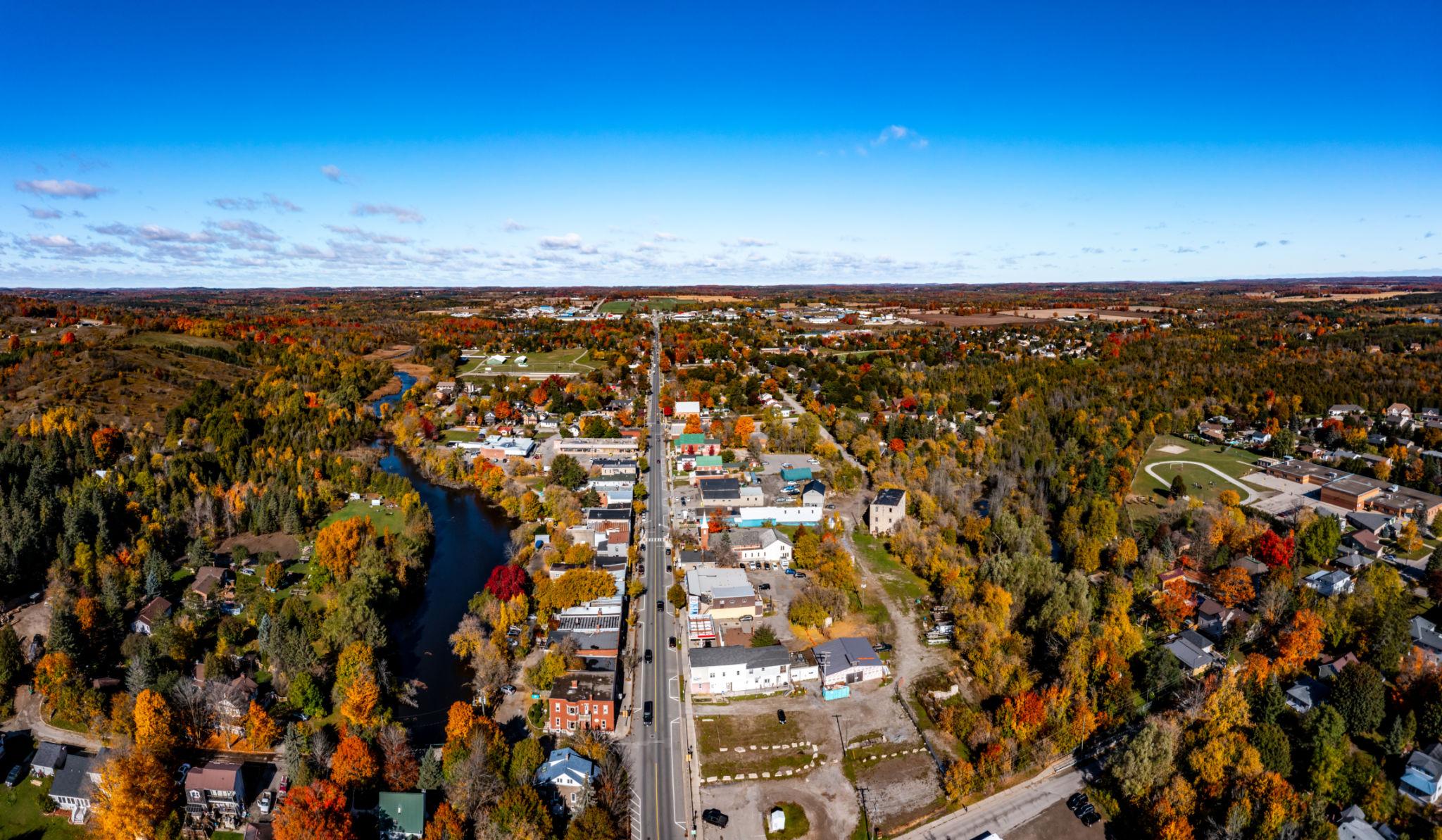
On a map, Wellington County straddles urban and rural. It includes Centre Wellington, Erin, Guelph-Eramosa, Mapleton, Minto, Puslinch, and Wellington North. Guelph is politically separate, yet its gravity pulls on values and cap rates countywide. Highway 6 and 401 access push industrial demand around Puslinch and Guelph-Eramosa. Downtown Fergus and Elora support steady retail and mixed-use demand tied to tourism and local services. Outward in Minto and Mapleton, rents and yields behave like small-town Ontario, not suburban Toronto.
This mosaic trips up appraisers who cut and paste assumptions from Kitchener, Milton, or Mississauga. A seven percent cap rate might be too soft for a tertiary main-street asset in Arthur, while a modern small-bay industrial unit near 401 access may trade tighter because users will pay a premium for logistics efficiency. Commercial land appraisers in Wellington County must also account for servicing constraints, aggregate overlays, and conservation authority boundaries that do not feature as prominently in suburban infill markets. If your appraiser does not say anything about servicing timelines, hydro capacity, or source water protection in a land report, they likely missed a lever that moves value by double digits.
What commercial appraisal actually does for you
Most readers meet appraisers when a bank asks for a report. That is only one use case. Commercial building appraisers in Wellington County support:
-
Financing, both new loans and renewals. Lenders typically require an AACI P.App designated appraiser and a narrative report that complies with CUSPAP. Short “form” reports rarely pass for commercial mortgages unless the loan is small and the lender is a credit union with a narrow risk appetite.
-
Acquisition and disposition. Independent valuations help buyers avoid overbidding and give sellers a reality check before listing. In counties like Wellington, where data is thinner and private deals common, a seasoned appraiser’s off-market intelligence fills gaps the MLS cannot.
-
Commercial property assessment appeals. MPAC sets assessed values for taxation, but owners often engage appraisers to support Requests for Reconsideration or appeals, especially after expansions or use changes. A tight commercial property assessment in Wellington County can trim operating costs for years.
-
Expropriation, partial takings, and loss of access cases. These are specialized and often require appraisers with litigation experience and comfort with the Ontario Land Tribunal process. Expect longer timelines and higher fees, because the work requires more evidence and more site nuance.
-
Estate planning, partnership breakup, and shareholder disputes. Neutral, defensible opinions keep disagreements from turning into lawsuits.
Knowing your purpose helps you filter commercial appraisal companies in Wellington County. A firm strong in lender work may be less nimble with development land, and the reverse can be true. Some one or two person shops in the county deliver excellent quality on retail and small industrial but will decline complex expropriation or subdivision land files, which is wise and honest.
Cost is not just a number on a quote
Appraisal fees in Wellington County aren’t uniform, and you should be wary of anyone who quotes sight unseen. Still, patterns exist. For standard, non-litigation work, ranges I have seen over the past few years look like this:
A single tenant commercial condo or a small owner-occupied building under 10,000 square feet often lands in the 3,000 to 5,000 dollar range, depending on access to comparables and whether a full cost approach is necessary.
A small to mid-size multi-tenant retail plaza or light industrial with three to eight tenants, 12,000 to 40,000 square feet, often runs 4,500 to 9,000 dollars. Complexity rises quickly with staggered leases, operating cost reconciliations, and vacancy history.
Commercial land appraisals in Wellington County vary the most. Unserviced rural land with clear highest and best use might be 5,000 to 9,000 dollars. Serviced or partially serviced land in growth nodes, or parcels with environmental overlays, can push into 10,000 to 25,000 dollars and sometimes beyond if phased absorption modeling is required.
Special-purpose assets, cold storage, automotive, hospitality, or properties with legal non-conforming rights, are quoted individually. Expect longer timelines and higher fees if the appraiser needs to source unusual comparables or consult engineers.
These are defensible ranges, not promises. Two factors drive fees more than others: how much verification the appraiser must do to assemble a credible data set, and whether the valuation requires more than one primary approach, such as both an income analysis with lease audits and a land residual or subdivision analysis. If a low bid implies the appraiser will skip the legwork, the discount often becomes a cost later when the lender rejects the report or requires extensive revisions.
The quality signals that lenders and buyers notice
No one wants to read a 120 page report that says little. At the same time, short does not mean weak and long does not mean strong. Quality is about transparency and defensibility. The better commercial building appraisers in Wellington County show how they got there: they explain the highest and best use, reconcile income and direct comparison results, and tie adjustments to evidence, not wishful thinking.
Look for clear treatment of lease terms. In multi-tenant properties, a strong report normalizes rents to market, distinguishes between base rent and additional rent recoveries, and explains how vacancy and credit loss were chosen. If a plaza in Fergus has three tenants with net rents of 19, 22, and 24 dollars per square foot and a fourth with a gross lease at 32, the income approach needs to peel back the gross lease to a net equivalent. Otherwise the NOI will be wrong and the cap rate they choose will not match the income stream.
Cap rates deserve scrutiny in secondary markets. In the county, older main-street retail often trades in the high six to mid eight percent range, while newer small-bay industrial near major routes can transact in the mid five to low seven range. These are wide ranges by design. An appraiser who claims a tight 5.0 percent cap without strong comparable sales and logic about tenant quality, lease length, and location risk should trigger questions. By the same token, if the report imports GTA cap rates without explaining why they apply to Mount Forest or Harriston, you can expect pushback from a prudent lender.
For land, watch how the appraiser handles servicing and timing. A report that assumes immediate, full municipal servicing where a five year horizon is realistic will overshoot value. Good land appraisers in Wellington County speak with municipal staff, confirm allocation status, and adjust comparables for time and risk. They also flag when conservation or source water rules affect net developable area. Sometimes a five acre site is really three and a half acres when you net out buffers and easements. That is not a small difference.
Lastly, CUSPAP compliance and AACI designation are table stakes for commercial work used by banks. Some lenders maintain an approved appraiser list. If your chosen firm is not on it, build in time for pre-approval or select from the lender’s panel. It seems like a nuisance until a mortgage underwriter refuses to accept a report you already paid for.
Timelines that survive real life
Most straightforward commercial building appraisals in the county take 2 to 4 weeks from engagement to delivery. That includes site inspection, document review, comparable verification, and internal quality control. Rush service is often available in 5 to 10 business days, sometimes faster, at a premium of 20 to 50 percent. Promises of a 3 day narrative report for a multi-tenant income property usually mean corners will be cut, or the firm is reusing a template with minimal adjustment. That can pass for a small top up loan, but it is risky for a purchase or a construction facility.
What stretches timelines in Wellington County are not always the appraisers. Municipal records can be slow to retrieve, especially older building permits and occupancy records. Environmental questions surface after an inspection, leading to requests for a Phase I ESA or at least a historical fire insurance plan. Tenants delay access for interiors. Surveyors take a week to find old plans. The best appraisers communicate these friction points early and tell you what they need to keep the train on the tracks.
Here is a short, practical list that often compresses timelines by several days when assembled in advance:
- A current rent roll with lease start and expiry dates, rent steps, recoveries, and options.
- Copies of major leases, at least for anchor tenants or any with atypical terms.
- Operating statements for the past 2 to 3 years, with a current year-to-date.
- A recent survey, site plan, or as-built drawing and any building measurements on file.
- Contact information for a property manager or tenant rep who can coordinate access.
The land question: when a “commercial” file behaves like development
Several owners are surprised when a commercial land appraisal in Wellington County looks and feels like a development study. That is not scope creep, it is valuation reality. If highest and best use is future development, the appraiser cannot credibly price the site without addressing servicing timelines, phasing, and market depth. A small example makes the point.
Consider a 6 acre parcel at the edge of a settlement area in Guelph-Eramosa with mixed-use potential. It fronts a regional road, but the nearest sanitary trunk is 900 metres away. If the appraiser assumes full services can arrive in 12 months, values net out high. If they speak to public works and learn that capital plans fund that extension in year four, and even then capacity is allocated first to another block, the present value changes markedly. Under realistic timing, the absorption curve shifts out, risk rises, and discount rates widen. A 10 to 20 percent swing at the land stage is not unusual once servicing facts are verified.
Good firms also pull in actual costs or at least defensible estimates for soft and hard servicing. In Wellington County, rock can lurk under shallow soils, especially in Erin and Puslinch. If every sewer trench needs hoe-ramming, a paper pro forma will not survive a contractor’s bid. An appraiser who has been burned by this before will temper a glowing residual result with a few pointed paragraphs on geotechnical uncertainty. That kind of caution is not pessimism, it is the voice you are paying for.
How cost, quality, and time play together
You cannot maximize all three. If you need a full narrative appraisal for a refinance of a multi-tenant industrial building in two weeks, you will pay more and accept a tighter draft-review window. If the budget is fixed and modest, then expand the timeline, narrow the scope, or simplify the property type. The trade works if you make it explicit.
Owners who save 1,000 dollars on fees only to lose three weeks to lender rework do not feel frugal. Buyers who rely on a desktop estimate for a property with environmental hair are taking a bet with thin odds. Meanwhile, lenders who push for 5 day turnarounds on a file that deserves three weeks risk underwriting blind.
The sweet spot for most commercial building appraisal in Wellington County is a two to three week schedule with a mid-range fee from a firm that knows the submarket. Give them access, give them the numbers promptly, and push for early warnings if facts do not align with the narrative you expect.
Choosing among commercial appraisal companies in Wellington County
There are fewer firms than in the GTA, which can be a blessing. You tend to get senior attention because teams are smaller. That said, geography and travel time matter. A Guelph based appraiser can be efficient for Puslinch or Guelph-Eramosa, while a North Wellington file might be better for a firm that regularly works Mount Forest and Arthur.
Ask about experience by property type and township. A retail strip in Elora is not the same as one in Georgetown even if tenants share names. For industrial, confirm they handle rent step-ups, free rent periods, and TMI recoveries with tenant-by-tenant detail. For land, ask who they call at the municipality and whether they have valued similar sites within the past two years.
A short set of questions helps separate marketing from capacity:
- Which submarkets in Wellington County do you appraise most often, and what have you done in the past 12 months that resembles my asset?
- Are you on my lender’s approved list, and if not, have you worked with them before?
- What approaches to value do you anticipate using, and why would you exclude any?
- What is the expected timeline from site visit to draft, and what could delay that?
- Who will inspect and who will write the report? Will an AACI sign as the author?
You will learn more from how they answer than the words themselves. If the appraiser asks good questions back, that is a positive sign. If they promise the moon before they know whether your leases are net, gross, or semi-gross, be careful.
The Wellington County lens on data, comps, and confidentiality
In dense urban markets, an appraiser can pull dozens of reasonably similar sales and assemble a tight grid. Wellington County does not always offer that luxury. Private deals, long-held family properties, and mixed-use buildings with residential components reduce transparency. The best commercial building appraisers in Wellington County compensate by triangulating. They call brokers, verify price and terms directly when possible, and use adjusted comparables from nearby markets with explicit, reasoned geographic adjustments.
Cap rate evidence is similarly sparse. A sale in Fergus might be one of three that traded in a year with full disclosure. That is why narrative quality matters. If the appraiser lays out their evidence, shows adjusted NOI, and explains why a 6.75 to 7.25 percent range captures the risk profile, a lender can underwrite with a clear head even if the sample is small.
Confidentiality binds the profession. Do not be surprised when an appraiser cannot name a vendor or disclose a net price detail without permission. What you can ask for, and should, is the logic of adjustments and the strength of the verification. Phrases like broker confirmed or purchaser confirmed are better than MLS indicated for commercial assets.
Appraisals and MPAC: how they intersect and where they diverge
Owners often ask whether a commercial property assessment in Wellington County set by MPAC should match a fee appraisal. They serve different masters. MPAC assesses for property tax using mass appraisal techniques and a legislated valuation date. A fee appraiser values your specific property for a defined purpose on a current effective date. The two numbers can differ widely without either being wrong.
That said, a strong fee appraisal often plays a role in assessment appeals, especially when MPAC’s model misses atypical lease terms or operational issues. If your building has chronic vacancy due to a functional problem, such as obsolete loading or a constrained yard, an appraiser’s income approach can help support a request for reconsideration. It is not automatic, and timelines for the appeal cycle matter, but the tool is there.
What can go wrong, and how to avoid it
Two small stories illustrate common pitfalls.
A local investor in Fergus purchased a three tenant retail building and hired the cheapest appraiser from out of town for financing. The report used two comparables from Brampton plazas with national anchors and triple net leases, then applied a five and a half percent cap to the subject’s NOI. The lender balked, requested a review, and ultimately demanded a new report from an AACI on their panel. The second appraiser found that two of the subject’s leases were semi-gross with landlord responsibility for snow removal and minor repairs. Net income was 8 percent lower when standardized, and the market cap rate was 6.75 percent based on verified county sales. Financing closed three weeks late, the borrower paid for two appraisals, and the spread changed by 30 basis points due to perceived risk.
In another case, an owner in Puslinch sought a commercial land appraisal to price a sale to a developer. The first draft assumed immediate serviceability after a road improvement that was still under design. A phone call to the township confirmed a three year horizon. The appraiser reworked the analysis as a phased land sale with allocation uncertainty baked in. Value dropped by roughly 15 percent, which felt painful, but the deal closed smoothly because expectations met reality.
The lesson is not that appraisers are fallible, which they are, but that information quality shapes value as much as math. Bringing full documents forward, answering questions promptly, and insisting on local evidence go a long way.
A practical path to selecting the right appraiser
Begin with purpose. If you need a commercial building appraisal in Wellington County for financing, ask your lender for their approved list first. If the lender is flexible, seek firms that routinely do bank work in the county and hold AACI designations.
Match expertise to asset. Choose commercial land appraisers in Wellington County for development parcels and ensure they will address servicing, absorption, and policy context. For income properties, prioritize teams that show lease analysis depth and can defend cap rates with local sales.
Schedule with honest slack. If a closing is tight, engage early. Share leases, rent rolls, and financials up front. Book site access the day you sign an engagement letter. Ask for a quick phone call after the inspection to flag any surprises while there is still time to react.
Price for value, not minimums. A mid-range fee from a firm that communicates and verifies is usually cheaper than a bargain fee that buys friction. Negotiate scope instead of pushing price alone. If a lender will accept a shorter format with the same analysis depth, you can save without quality loss.
Expect drafts and answer quickly. Most good firms will provide a draft or a summary of conclusions. Turn comments in 24 to 48 hours. The calendar is your friend when you respect it.
The bottom line for Wellington County owners and lenders
Commercial building appraisers in Wellington County operate in a market where local context decides outcomes. Capitalization rates shift across town lines, data is https://www.instagram.com/realexappraisal/ sparser than urban cores, and land values hinge on service schedules and policy maps. Cost, quality, and timelines are not independent. If you respect the physics, you can align them.
When you choose among commercial appraisal companies in Wellington County, prioritize local experience, AACI credentials, lender familiarity, and transparent reasoning. For commercial property assessment questions, use appraisals as strategic tools, not blunt instruments. For land, demand proper treatment of servicing and absorption. And whenever someone quotes a number that sounds too clean for the messiness of real property, slow down long enough to ask how they got there.
Do that, and you will spend less time revising reports and more time making decisions with confidence.