Commercial Property Assessment Guelph Ontario: When and Why You Need One
If you own or plan to buy commercial real estate in Guelph, you will meet the appraisal question sooner than you think. Lenders ask for it, partners expect it, and the numbers inform big decisions that are hard to unwind. The city’s market is active and layered, from downtown mixed use to south end retail pads, from older masonry industrial near the rail corridor to newer tilt‑up in the Hanlon Business Park. Values move with tenancy, zoning, and building condition more than with broad headlines. A proper commercial property assessment in Guelph, Ontario gives you a grounded view of worth that stands up to scrutiny.
I have sat at boardroom tables with owners who believed a property was worth 20 percent more than the final number. I have also watched clients walk away from deals that looked shiny at first glance but fell apart once the rent roll was matched against reality. A good appraisal will not flatter. It will explain.
Assessment versus appraisal in Ontario
Two words often get mixed: assessment and appraisal. They serve different masters.
In Ontario, MPAC, the Municipal Property Assessment Corporation, assigns an assessed value to each property for taxation. That figure underpins your annual property tax bill. MPAC relies on mass appraisal models and a legislated valuation date. It is not a site‑specific opinion created for financing or a transaction, and it is not updated in real time. You can request reconsideration or appeal to the Assessment Review Board, but the starting point is a mass model rather than a bespoke analysis.
A commercial building appraisal Guelph Ontario is a point‑in‑time opinion of market value, developed by a qualified appraiser under professional standards. It is property‑specific, purpose‑driven, and based on verified market evidence. Lenders, investors, courts, and auditors rely on it. When people search for commercial appraisal companies Guelph Ontario or commercial building appraisers Guelph Ontario, they are seeking this service, not a tax assessment.
Both matter. MPAC sets your tax load and can be challenged with evidence. A fee appraisal informs purchase, financing, partnership, insurance placement, and more. Each uses different data and methods, and each is fit for a different purpose.
When you actually need one
Owners often call once the bank asks for an appraisal as a loan condition. That is common, but it is far from the only trigger. In practice, you likely need a commercial property assessment Guelph Ontario when any of the following applies:
- You are buying or selling a commercial building, plaza, industrial condo, or development land, and price needs a defensible grounding.
- You are refinancing, creating or renewing a line of credit, or adding a construction loan, and the lender requires updated value and as‑stabilized projections.
- You are reorganizing a partnership, settling an estate, or dividing assets for family law, where a neutral market value reduces conflict.
- You are appealing property taxes, need support for a reduction claim, or the site has changed use, and you want evidence beyond MPAC’s mass model.
- You are planning redevelopment or a change of use, and you must understand as‑is land value versus as‑if rezoned or as‑if built value.
That list covers most, not all, of the reasons. Lease renegotiations, insurance placement, and expropriation matters also draw on formal valuations in Ontario.
How value is developed, and why approach matters
Commercial building appraisers Guelph Ontario do not lift a number from a website. They develop value through three classical approaches, then reconcile based on relevance and evidence.
Direct comparison approach. The appraiser analyzes recent sales of comparable properties and adjusts them for differences, such as size, age, condition, location, tenancy, and market exposure. In Guelph, a 12,000 square foot light industrial building on a 1‑acre site near the Hanlon may sell at a different price per square foot than a similar build in a congested downtown block with limited loading. Adjustment grids, paired sales, and market interviews anchor the adjustments. Where the market is thin, the search radius may extend to nearby markets like Kitchener‑Waterloo or Cambridge, but comparability and local context still lead the analysis.
Income approach. For income‑producing properties, the income approach often carries the most weight. The appraiser normalizes the rent roll, tests it against market rents, deducts vacancy and credit loss allowances, and underwrites expenses. A net operating income is capitalized into value using a market derived capitalization rate. As an illustration, a small multi‑tenant industrial building with stabilized NOI of 280,000 dollars and a market cap rate of 6.25 percent points to 4.48 million dollars. A change of 50 basis points in the cap rate can move value by several hundred thousand dollars, which is why local evidence matters. For assets with shorter leases or significant capital needs, the appraiser may also complete a discounted cash flow over a 5 to 10 year horizon to capture lease rollovers and planned capital expenditures.
Cost approach. For newer special‑purpose buildings or for insurance placement, the appraiser may estimate land value plus replacement cost new, less physical, functional, and external obsolescence. In practice, this approach often sets a ceiling rather than the market price for second‑generation space. In Guelph, where some high‑quality tilt‑up industrial is relatively young and land can be scarce in serviced business parks, the cost approach provides a useful cross‑check.
Reconciliation is a judgment call grounded in evidence, not a simple average. For a leased retail pad on Stone Road with a national covenant, the income approach likely leads. For a vacant owner‑occupied shop with unusual features, the direct comparison and cost approaches may dominate.
What is different about Guelph
Guelph is not Toronto, and that is a good thing when you want to read a market on its own terms. A few local factors often shift value:
University and research pull. The University of Guelph anchors demand for certain retail and hospitality uses and supports a flow of spinoff research and agri‑food enterprises. Properties within walking reach of campus, and sites that can serve student or faculty populations, reveal different rent and turnover patterns than suburban retail strips further south.
Industrial backbone. The city has a solid base of manufacturing and logistics, with proximity to Highway 6 and Highway 401 via the Hanlon Expressway. Modern clear heights, loading, and trailer parking command premiums. Older buildings can remain highly functional if upgraded, but loading constraints, column spacing, and low clear heights show up directly in achieved rents and cap rates.
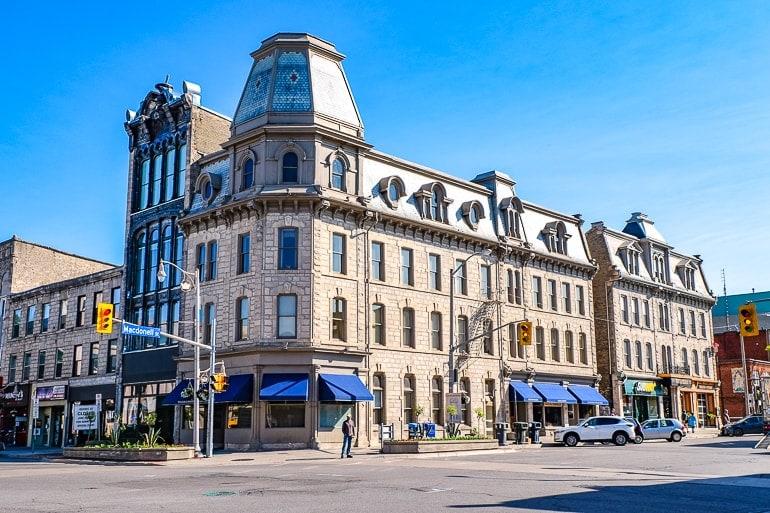
Downtown character buildings. Stone and brick heritage properties can be jewels, yet they carry maintenance and code compliance costs that the cap rate must respect. Exposed beams lease well to creative office tenants, but elevator retrofits, fire separations, and accessibility upgrades change the underwriting.
South end retail and medical. The Stone Road and Gordon Street corridors attract service retail and medical office. Medical users pay for parking and strong signage more than pure window frontage. Lease structures vary widely, from gross with expense stops to full net, and that affects comparability.
Servicing and planning status. For land, full municipal services, or the cost to bring them in, are often the swing factor. Sites at the edge of the built boundary or with holding provisions require careful timing assumptions. A change from general employment to site‑specific permissions can move value by magnitudes, but the probability and timeline must be evidence‑based, not aspirational.
These are not generic notes. They show up in rent rolls, in downtime between tenants, and in the spread between asking and achieved pricing. Commercial land appraisers Guelph Ontario weigh those specifics daily.
Land is not a simple multiple
When the subject is a vacant site, owners sometimes assume a rough price per acre based on a story from across town. Raw land valuation is more disciplined.
Planning status comes first. Is the land within the built boundary, designated employment, or planned for mixed use, and what is the likelihood and timeline of rezoning or a plan of subdivision. An appraiser will examine the official plan, zoning bylaw, secondary plans, and any site‑specific policies. They will interview planning staff when appropriate.
Servicing counts next. A site with water, sanitary, and storm services at the lot line is not the same animal as a parcel that needs a trunk extension or a pumping station. The differential can exceed 500,000 dollars per acre in some contexts. The appraiser will adjust for extraordinary site works, soil conditions, and environmental constraints.
Parcel shape and access matter. A deep lot with limited frontage may require internal roads and will yield less efficient site coverage. Corner exposure can lift retail land values. For industrial, trailer circulation and loading orientation can be the make‑or‑break issue.
Transaction structure then shapes the number. Vendor take‑back financing, long due diligence periods, and conditionality all affect the interpretation of sale prices in the evidence set.
Commercial land appraisers Guelph Ontario will often test residual land value as well, backing into what a rational developer can pay given achievable rents or sales, development charges, soft costs, and profit.
What lenders want to see, and how investors read it
Most lenders in Ontario will order the appraisal themselves from an approved roster. They look for independent analysis and a clear connection between market evidence and the concluded value. For income properties, they care about debt service coverage. If the appraiser supports an NOI of 300,000 dollars and the loan requires a 1.30 coverage at a blended annual debt service of 200,000 dollars, the sizing passes. If the coverage falls short, either the loan shrinks or the interest rate rises. Portfolio owners sometimes commission their own appraisals first, to understand how a lender will likely view the deal.
Investors read slightly differently. They tend to focus on the credibility of rent assumptions, rollover risk, capital items over the next five years, and exit cap rate. A downtown brick office with 40 percent of its GLA turning over in the next two years is not the same risk profile as a single‑tenant warehouse with eight years remaining on a net lease. A tight appraisal will separate those two.
Pre‑appraisal preparation that saves time and money
You can cut a week from the process by gathering core documents up front. For a commercial building appraisal Guelph Ontario, appraisers typically ask for the following:
- Current rent roll with lease start and expiry dates, base rents, step‑ups, options, and area by unit, plus copies of major leases and any amendments.
- Three years of operating statements, with detail for taxes, insurance, utilities, repairs, management, and non‑recurring items, plus the current year budget if available.
- Plans, surveys, site plan approvals, building permits, environmental reports, and any recent building condition assessments.
- A list of recent capital expenditures and known upcoming needs, such as roof replacements, HVAC, or code compliance work.
- For land, planning correspondence, pre‑consultation notes, engineering reports on services, and any encumbrances or easements.
If you do not have a formal rent roll, a simple spreadsheet with tenant names, areas, and start and expiry dates is enough to begin. Gaps get filled during verification.
Timelines, fees, and scope
Clients often ask for a price before scope is clear. The honest answer is that cost tracks complexity and risk.
A small industrial condo with a single tenant and clean environmental history can be appraised within 1 to 2 weeks once access and documents are available. A multi‑tenant plaza with several leases, percentage rent clauses, and capital needs may take 2 to 3 weeks. A development site with planning uncertainty or a specialized asset such as a food plant may require 3 to 5 weeks, including market interviews. Rush fees can compress timelines by several days, not by half, because verification with third parties takes real time.
Fees for commercial appraisal companies Guelph Ontario typically range from the low thousands for straightforward properties to the high thousands or more for complex or high‑value assignments. Litigation support or expert testimony is often quoted separately. If the quote you receive is dramatically lower than others, ask what is excluded. Site measurements, lease abstraction depth, interviews, and the level of sales verification all add or subtract effort.
Lease structure details that swing value
Two properties with the same gross rent can have very different net income once lease structure is unpacked.
Triple net leases shift taxes, insurance, and common area maintenance to the tenant, leaving the landlord with only structural repairs, management, and reserves. Modified gross or semi‑gross leases include more expenses on the landlord side. Expense stops, base year provisions, and caps on controllable expenses change the math. In Ontario, tenants often pay TMI, yet the specifics vary widely.
An appraiser will normalize to market terms. If one tenant’s net rent is low but they carry a heavy share of capital items that a new lease would not, the appraiser moves numbers to a level field for comparison. Percentage rent in retail, especially in food and beverage near the university, introduces variability that must be averaged over cycles, not cherry‑picked from a single strong year.
Environmental and building condition are not footnotes
Phase I environmental site assessments and building condition assessments are not box‑ticking exercises. I have seen a clean industrial building lose seven figures in value after a Phase II identified soil impacts along a former rail spur. The deal still closed, but at a discount that covered remediation and risk.
In older masonry downtown buildings, life safety upgrades, elevator replacements, and façade work can be looming costs. A proforma that ignores a 600,000 dollar roof and mechanical package due within five years is a wish, not an investment plan. Good appraisers do not estimate these in full engineering detail, but they flag them, source reasonable allowances, and press owners for documentation.
Tax assessment appeals, and how an appraisal fits
When owners see a jump in their tax bill, they sometimes call an appraiser. The right sequence is to examine MPAC’s reasoning and comparables, then decide whether a fee appraisal will strengthen the case. Not every appeal requires one. That said, for complex properties or when MPAC’s model misses a key factor such as chronic vacancy or functional obsolescence, a narrative appraisal that explains market value with evidence can sway a reconsideration or an ARB hearing.
Timing matters. The valuation date in the assessment cycle is fixed by legislation, and the appraiser must value as of that date, not today. This is where local knowledge helps, because your sales and rent evidence must bracket that valuation date, not drift years away.
Choosing the right professional in Guelph
Designations matter in Canada. For commercial work, look for an appraiser with the AACI, P.App designation from the Appraisal Institute of Canada. The CRA designation is oriented to residential. Beyond the letters, ask about specific experience in your asset type and in Guelph. A downtown stone building is not the same as a tilt‑up warehouse near Laird Road.
It also pays to discuss scope early. Do you need as‑is market value only, or also as‑stabilized, as‑if complete, or prospective value upon completion and stabilization. Are you looking to understand a highest and best use question for a site that might convert from industrial to mixed use. The quote and the work product will differ.
Local presence helps with verification. Commercial building appraisers Guelph Ontario spend time talking to leasing brokers, property managers, and municipal staff. That soft market intelligence shows up in harder numbers.
Common pitfalls and edge cases
Owner‑occupiers often conflate business value with real estate value. A bakery that throws off strong profits may pay above‑market occupancy costs to the realty company that owns the building. An appraiser will separate the enterprise value from the real estate by normalizing rent to market and excluding equipment and goodwill.
Short ground leases complicate land value. A retail pad on a ground lease with 12 years remaining is a different proposition than fee simple land. Yield requirements move up as the reversion risk grows.
Special‑purpose assets rarely trade, so the cost approach and income proxies https://realex.ca/ carry more weight. Cold storage, food processing, and research labs have features that general industrial comparables do not. The appraisal will lean on replacement cost and on rent in place adjusted for tenant improvement allowances and re‑tenanting risk.
Condominiumized industrial parks have a two‑tier market. End users sometimes pay more per square foot than investors, because they price in operational convenience. The appraiser must pick the buyer profile that matches the likely market for the subject.
Two quick sketches from the field
A mid‑sized manufacturer owned a 45,000 square foot plant near the Hanlon. They were negotiating a sale‑leaseback to free up capital for new equipment. Their target price assumed a 5.75 percent cap rate based on national sale‑leaseback press releases. Local evidence for similar Guelph product with their credit profile supported a 6.5 to 6.75 percent cap. The appraisal helped reset expectations. They improved the lease terms with an extra renewal option and clearer maintenance language, which tightened risk, and they achieved a price within 3 percent of the appraised value.
A small investor considered a vacant downtown brick building, 12,000 square feet over three floors, gorgeous windows, tired services. The seller’s proforma showed premium creative office rents with minimal downtime. The appraisal scrubbed the lease‑up assumptions, added realistic tenant improvement packages, factored an elevator replacement and life safety upgrades, and used a lease‑up period of 18 months with free rent and agent fees. The as‑stabilized value still penciled out, but the as‑is value was 20 percent lower once costs and time were applied. The buyer renegotiated, closed, and now runs a stable asset because the numbers were honest.
What to expect during the process
The workflow is predictable when both sides do their part. After engagement, the appraiser inspects the property, photographs key features, and takes basic measurements if plans are missing. They verify leases with the landlord or tenant representatives and interview brokers for current rent and cap rate trends. They build a comparable set, confirm details with participants where possible, and prepare the analysis. Drafts are unusual for financing reports, but if the purpose is planning or partnership, a management draft can help align understanding before final.
For development land, an appraiser may attend pre‑consultation meetings or at least review notes, and will stress‑test a proforma against local market absorption, development charges, and soft costs that reflect Guelph, not a GTA average. Build costs change, and the appraiser will reference current cost guides, recent tenders, and contractor input as available, with proper caveats.
The bottom line
Commercial real estate rewards those who trade stories for evidence. A commercial property assessment Guelph Ontario, done by a qualified professional, will not just affirm a number. It will tell you why. It will show how the lease terms, the building’s bones, the site’s permissions, and the market’s mood create a value that stands in a bank’s credit file and in a partner’s binder.
When you are deciding between commercial appraisal companies Guelph Ontario, ask for clarity on scope, timelines, and verification standards. Bring your documents to the table early. Expect questions that test assumptions. The result should read like a well argued case, anchored in local comparables and careful underwriting.
Real properties are unique, but the discipline travels. In a city like Guelph, where industry, education, and small business meet, a careful appraisal is less a hurdle and more a map. It guides action. And it helps ensure that when you do move, you move with your eyes open.