Commercial Appraiser Brant County: Credentials, Experience, and Local Insight
Every commercial property tells a story. In Brant County, that story often includes a mill-era footprint along the Grand River, a tilt toward modern logistics off Highway 403, and a steady drumbeat of small business growth around Paris, St. George, and Burford. Reading that story with accuracy is the work of a commercial appraiser. For lenders, investors, owners, and municipalities, a defensible market value is the hinge that allows deals to close, financing to proceed, and planning decisions to hold up under scrutiny.
This field rewards practitioners who pair formal training with local fieldwork. Credentials open the door, but hours spent in industrial bays on Oak Park Road or in heritage storefronts along Grand River Street North sharpen the judgment that keeps a valuation on solid ground. If you are considering commercial appraisal services in Brant County, here is what quality looks like, what to expect during the process, and how a seasoned appraiser handles the messy edges that so often shape value.
What qualifies a true commercial specialist
Appraisal in Canada is governed by the Appraisal Institute of Canada under the Canadian Uniform Standards of Professional Appraisal Practice, or CUSPAP. For commercial assets, the gold standard is the AACI, P.App designation, which demonstrates rigorous training in income capitalization, land valuation, expropriation analysis, and complex property types. Some practitioners also hold the MAI designation from the Appraisal Institute in the United States, an asset when cross-border lenders enter the file.
Lenders and institutional clients almost always require an AACI in good standing, current errors and omissions insurance, and familiarity with CUSPAP reporting options. In Ontario, that also means an appraiser who can speak the language of municipal planning frameworks and development charges, and who knows when a Conservation Authority regulation will quietly cap a site’s utility.
A few on-the-ground observations matter as much as letters after a name. Commercial property appraisers in Brant County need regular exposure to:
- Industrial and logistics facilities tied to Highway 403, where ceiling clear heights, yard depths, and trailer parking can add or subtract real dollars.
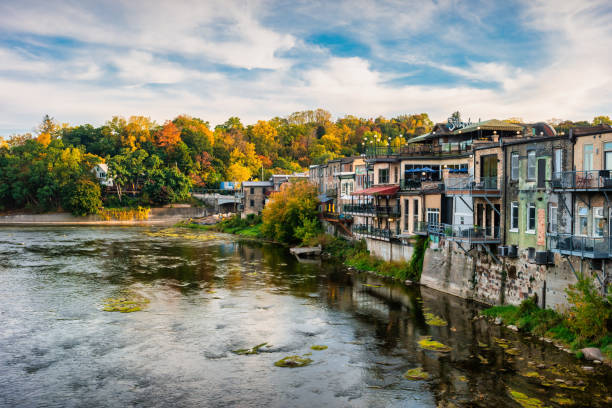
- Adaptive reuse and heritage retail in Paris, where the charm premium is counterbalanced by GRCA floodplain overlays and heritage maintenance obligations.
- Highway commercial sites near Rest Acres Road and Powerline Road, where traffic counts and access management shape highest and best use far more than building age.
If you are scanning for a commercial appraiser in Brant County, ask for examples involving similar property types and the last time the appraiser valued an asset within a few kilometres of your site. Market thinness magnifies the benefit of local comparables.
The approaches that carry weight
Three valuation approaches anchor most commercial assignments. Each has its place, and judgment lies in knowing when to emphasize one over another.
Direct comparison is the most intuitive. It works best for small-bay industrial condos, newer single-tenant boxes, and standard retail units where sales data exist within a 50 to 100 kilometre radius. The appraiser must normalize for lease status, tenant strength, and condition. In Brant County, pure apples-to-apples sales can be sparse, so the search often spreads to Cambridge, Woodstock, and Hamilton, with adjustments for highway proximity and market depth.
Income capitalization holds the most sway for leased assets. The work starts with a clean rent roll, then drills into escalations, expense recoveries, typical vacancy in the submarket, and re-leasing costs. Capitalization rates in Southwestern Ontario have moved in a band that, over the past few years, has typically ranged from the mid 5 percents for strong covenants in prime logistics corridors to the high 7 percents and beyond for tertiary retail and older industrial. Rates change with debt costs and sentiment, so a credible report will show comparable cap rates and not just assert a point estimate.
Cost approach earns its keep for unique special-purpose assets where market sales offer little guidance. A modern food processing plant with specialized HVAC, or a quasi-public asset like a community medical building with subsidy layers, may call for a careful estimate of replacement cost new, less physical, functional, and external obsolescence. In Brant County, the external component can be decisive if the asset sits near flood hazard zones or on a constrained road grid.
Good reports triangulate among these approaches, but they do not pretend each carries equal weight. If a retail plaza produces stable income with market rents, income should drive. If a small owner-occupied shop trades mainly on replacement utility, cost and comparison together can make the picture.
Highest and best use in a county where zoning still matters
Highest and best use analysis sits near the front of a narrative report, and for good reason. It answers whether the current use of the site is physically possible, legally permissible, financially feasible, and maximally productive. In the County of Brant and the City of Brantford, that inquiry is rarely a box tick.
Industrial clusters near Garden Avenue and Oak Park Road often face transition pressure as land values rise. An older single-bay building on a two-acre parcel with generous frontage may support a more intensive logistics use, but that depends on truck turning radii, existing curb cuts, and whether the M zoning category allows outdoor storage or requires full screening. On the retail side, highway commercial nodes around Rest Acres Road continue to densify, yet access management and turn restrictions can limit the number of viable driveways, which in turn restrains tenant mix.
Heritage overlays in Paris create a different set of constraints. The charm that drives foot traffic also restricts façade alterations. For valuation, that may depress the appeal to national chains but lift demand among boutique operators who prize the streetscape. When combined with the Grand River Conservation Authority’s floodplain mapping, the result can be a very narrow feasible envelope, and a precise one. A credible highest and best use analysis will show its homework: zoning citations, a sketch of setbacks and coverage, and dialogue with municipal staff when ambiguity exists.
Data, comps, and the reality of thin markets
Appraisers like data and transparency. Regional markets, including Brant County, test both. Sales can be private, leases contain confidentiality clauses, and industrial owners may operate on handshake renewals. Those conditions do not sink a valuation, but they do push the appraiser to blend sources.

I have stood in more than one equipment yard along Bishopsgate Road, chatting with owners about the last time they renewed a tenant. The paper trail might be a set of invoices rather than a signed lease. In that context, the task becomes building a defensible market rent from interviews, brokerage databases, and nearby published deals, then layering in reasonable assumptions for recoveries and downtime.
A rule of survival: if you cannot verify, you qualify. A report worth reading labels hearsay as hearsay, states its assumptions, and shows enough sensitivity analysis that a reader can see the impact of a higher vacancy allowance or a 50 basis point shift in the cap rate. That level of transparency buttresses the value conclusion when a credit officer or investor pushes back.
Environmental and site-specific hurdles that change value
Environmental due diligence is not an ornament around value. It is a lever. A Phase I ESA that identifies historical plating operations along a Grand River frontage or prior fuel dispensing on a highway site can trigger a Phase II. Even before full remediation estimates are available, stigma and financing friction often widen yields and cut land value. Reports should reflect that with explicit deductions for expected remediation or by moving the cap rate to account for perceived risk. The worst mistake is to treat environmental risk as a footnote and leave the reader to guess.
Topography, utilities, and access also matter. I have watched a site look excellent in aerials, then fall apart on inspection because the back third sat in a shallow bowl, unserviced and expensive to bring to grade. Another common trap involves partial services. A parcel just outside the fully serviced boundary in Brantford’s growth area may require private servicing solutions that limit buildable coverage. These are not academic details. They alter land residual values and change the answer to whether redevelopment is financially feasible.
Agricultural, agri-commercial, and the edges between
The County of Brant still carries a strong agricultural backbone. Appraisals involving agri-commercial assets live in a gray zone between pure farm and pure industrial. On-farm processing, cold storage, and cannabis facilities each carry wrinkles. Agricultural zoning can be permissive for farm-related commercial uses but restrictive for anything more. Distance to three-phase power, water volume, and road weight limits can swing value.
For cannabis, lenders often price risk aggressively. The specialized improvements do not always convert well to more general uses, https://realex.ca/commercial-real-estate-appraisal-advisory-in-brant-county-ontario/ and the tenant pool thins considerably. A cost approach will typically show a high replacement cost, but the market will discount heavily for functional obsolescence if the use falters. A balanced report will test value under continued specialized use and under a generalized alternative, especially where the borrower’s business plan depends on re-tenanting flexibility.
Rental rates, cap rates, and a moving target
No one likes a mushy answer, but there is virtue in a realistic range when markets shift. Across Brant County and adjacent nodes:

- Modern warehouse distribution space with 28 to 36 foot clear heights near Highway 403 has recently supported rents that commonly fall in the low to mid teens per square foot on a net basis, depending on size and loading.
- Older small-bay industrial with clear heights below 18 feet and limited loading often sees net rents in the high single digits to low teens, with higher gross rents when utilities are bundled.
- Street-front retail in Paris and St. George shows a wide spread. Well-located boutique units with strong foot traffic can surprise on rent per square foot, but depth, ceiling height, and utility capacity may lag modern expectations.
- Office space remains choppy. Small professional units in walk-up buildings trade more on convenience and parking than on Class A features, and absorption depends on the local business mix.
Capitalization rates respond to debt costs and perceived durability of income. Institutional-grade logistics space across Southwestern Ontario compressed to the mid 4 percents during the earlier part of the cycle, then widened as borrowing costs rose. In Brant County, stabilized industrial and well-leased strip retail frequently transact in the mid 5 to high 6 percent range when tenant quality is solid, while tertiary locations, vacancy risk, or short remaining lease terms can push yields into the 7s and 8s. These are not ironclad brackets, but they reflect conversations with brokers and recent transactions across the 403 corridor.
A sound commercial real estate appraisal in Brant County builds a cap rate not by fiat but by reference: three to six comparable sales, adjustments for location and covenant, and a cross-check using a band-of-investment method when mortgage terms are known.
Development charges, approvals, and cost creep
Valuing development land is both arithmetic and risk assessment. The arithmetic lives in the residual method. You forecast stabilized income or sale proceeds, back out development costs, soft costs, contingencies, profit, and financing, then discount to present value. The risk lies in the inputs.
In the County of Brant and the City of Brantford, development charges, parkland dedication, and servicing costs are not abstractions. They decide whether a marginal site is viable. Access to Highway 403 is a powerful draw, but interchanges can be capacity constrained, and traffic impact studies may trigger off-site works. A parcel on the wrong side of a planned infrastructure upgrade can sit idle for a cycle. If a report treats all greenfield parcels as fungible, be wary.
I keep a habit of calling planning staff early and confirming the status of the official plan designation, secondary plan timing, and site plan control triggers. Ten minutes on the phone saves future hours and often adjusts the land residual by more than any model tweak.
When appraisers add the most value
There are moments in the property lifecycle when bringing in a commercial appraiser is not just a lender requirement but an efficiency move.
- Pre-acquisition underwriting for a private buyer who has a partial data room and a seller with a firm price expectation. An independent value grounds negotiation and often spots environmental or access flags before they become price chips late in the game.
- Refinance after a lease rollover. If a building shifted from a single national tenant to a mix of local covenants, a fresh income analysis helps a lender size the loan correctly and spares surprises at credit committee.
- Expropriation or partial taking. Valuations under the Ontario Expropriations Act require careful attention to injurious affection and disturbance damages. A general market value opinion is not enough.
- Tax appeals and assessment review. MPAC assessments can outrun or lag market conditions. An appraiser who knows local cap rates and vacancy patterns can build a persuasive alternative.
- Estate planning or partnership dissolution. Fairness relies on a transparent, market-based estimate, especially when co-owners have different risk appetites.
Each of these assignments demands more than generic commercial appraisal services in Brant County. They call for an appraiser who has walked the site, interrogated the leases, and can defend their conclusion in a boardroom or a hearing.
Anatomy of a reliable scope and report
Expect a professional to provide a clear engagement letter, a timeline, and a realistic data request at the outset. You should also expect some pushback if documents are missing or inconsistent. A rushed valuation with thin support serves no one.
Here is a simple sequence that keeps most files on track:
- Define purpose, intended use, and client. A valuation prepared for financing under CUSPAP will differ from a Restricted Use report for internal planning.
- Gather documents. Rent rolls, leases, amendments, site plans, surveys, environmental reports, tax bills, utilities, and recent capital expenditure details all matter.
- Inspect the property, inside and out. Measure key features, photograph loading and parking, verify unit areas, and test access routes and visibility in person.
- Build the valuation. Select approaches, gather comparables, and model income with defensible market assumptions. Run sensitivity checks.
- Deliver and defend. Provide a clear narrative, disclose assumptions, and be willing to walk a lender or investor through the logic.
Turnaround times vary. For a standard single-tenant industrial building with clean documentation, 10 to 15 business days is a reasonable range. Multi-tenant retail with incomplete leases or land with active planning applications often needs three to five weeks. Fees commonly fall between roughly 3,500 and 12,000 dollars for typical commercial files in this region, moving higher for complex expropriation work or intensive development land analyses.
Local nuance that outsiders miss
Value lives in details. Brant County and Brantford share borders and infrastructure, but their planning frameworks and service capacities can diverge at the street level. A small office conversion on a quiet side street in Brantford will draw from a different tenant pool than an equivalent space in Paris. Truck traffic tolerance varies with road classification. And while both jurisdictions benefit from proximity to the GTA and the 401-403 corridor, congestion patterns and travel times can differ by a surprising margin depending on time of day and direction of movement.
The Grand River’s presence adds both amenity and constraint. Waterfront adjacency can boost retail and hospitality value in Paris, yet floodplain mapping can freeze expansion or impose elevation and flood-proofing costs that dull residual land value. Conservation Authority input is not a rubber stamp. A commercial appraiser who calls early and obtains mapping rather than guessing at boundaries will produce a more accurate highest and best use.
Broker networks play a larger role here than in dense urban markets. Off-market transactions matter. Knowing which local owners favor long renewals versus those who churn tenants to test rent growth will save an appraiser from importing the wrong comparables. For instance, a family-owned strip center that prioritizes stable occupancy may sit at a lower rent profile by design, so using that rent as a market ceiling would understate value for a property pursuing more active asset management.
Practical advice for clients seeking a commercial appraiser in Brant County
The best engagements start with candor. If you are hiring among commercial property appraisers in Brant County, share the full story. Omit the deferred maintenance list, and the model will miss capital needs. Withhold the environmental report, and the value will ride on an assumption you might not like. Confidentiality is standard under CUSPAP and professional insurance. The more transparent you are, the more precise the answer you get back.
Insist on local comparables, or at least on coherent adjustments for out-of-area data. Look for a report that lays out the cap rate evidence and the rent assumptions, not just the end number. When a file is time sensitive, ask the appraiser to flag any early concerns that could derail the timeline. A quick heads up that a survey is outdated or that site access needs clarification can accelerate the fix.
Recognize when scope creep is real. If the assignment begins as a stabilized income property and turns out to be a partial owner-occupancy with break clauses and turnover, the analysis is no longer standard. Agree to a revised timeline and fee rather than encouraging shortcuts that would weaken the result.
Why a Brant County base matters
Plenty of appraisers can model an income stream. Fewer can stand in a gravel yard on a windy March day and tell you, within a narrow band, what an equipment rental operator will pay for that yard space and whether the municipality will support heavier truck traffic on the access road. Fewer still can balance heritage charm against code compliance on a century-old building and explain how that cash flow supports a refinance today and a sale five years out.
There is a reason commercial real estate appraisal in Brant County remains a relationship business. Market intelligence flows in conversation as much as in databases. The professionals who show up, ask precise questions, and stay curious through changing cycles build a track record of values that hold under scrutiny. If you are selecting a commercial appraiser in Brant County, prioritize that mix of credentialed rigor and local mileage.
The bottom line on value and reliability
Commercial property appraisal in Brant County is a craft that rewards detail, patience, and field time. Good appraisers do not just pull numbers from a dataset. They reconcile imperfect information, pressure test a property’s income against market realities, and account for planning and environmental constraints that bear directly on worth. They document their logic so that a reader, whether a lender or a partner, can trace the path from raw data to value.
The result is not a magic number, but a reasoned opinion supported by evidence. In a market where one tenant’s covenant can lift a cap rate by 50 basis points and a floodplain line can erase the buildable depth of a lot, that kind of careful work is indispensable. When you need commercial appraisal services in Brant County, look for an AACI who writes clearly, answers questions directly, and can walk you through the property with as much ease as they navigate CUSPAP. That is how values stand up, deals move forward, and assets are managed with confidence.